


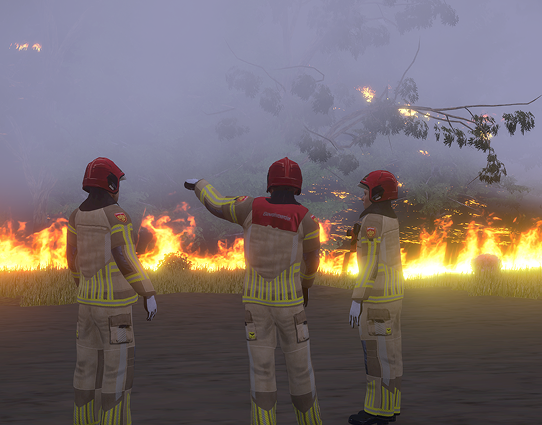
XVR On Scene provides a virtual training environment in which emergency responders and other frontline staff can experience complex situations, practise decision‑making, and learn from the consequences – while the instructor remains in control.
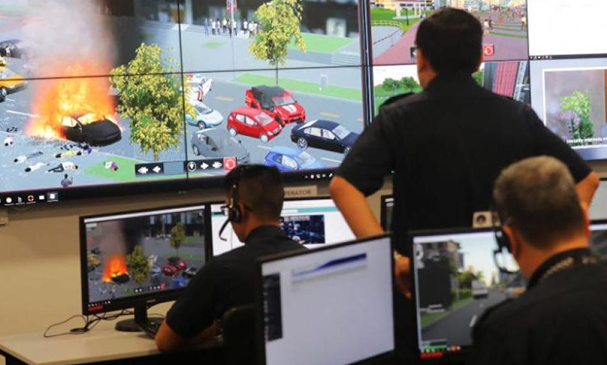
XVR On Scene is a virtual simulation environment developed to support the education, training, exercising, and assessment of emergency responders. It enables participants to experience realistic incidents in a safe, controlled, and repeatable virtual setting, where learning can take place without real-world risk.
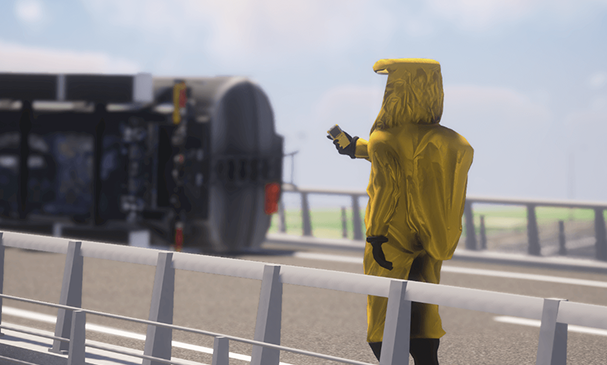
The platform is particularly well suited to incidents that are difficult, costly, or unsafe to recreate through live training. This includes complex or low-frequency events that responders may rarely encounter, but still need to be prepared for.
Virtual simulation makes it possible to expose participants to these scenarios in a structured and reliable way. By doing so, organisations can help build experience, confidence, and understanding before such incidents occur in the real world.
At the heart of XVR On Scene is experiential learning. Participants are placed inside dynamic scenarios where they must observe, interpret information, and make decisions as the situation unfolds, while the instructor remains in full control to ensure training is aligned with clear learning objectives and meaningful outcomes.
XVR On Scene combines instructional control with a wide range of capabilities designed to support realistic, effective training.
Instructor-led simulation
All training is guided by the instructor, who defines the learning objectives, controls the scenario, and steers the learning experience before, during, and after the exercise.
High-fidelity virtual environments
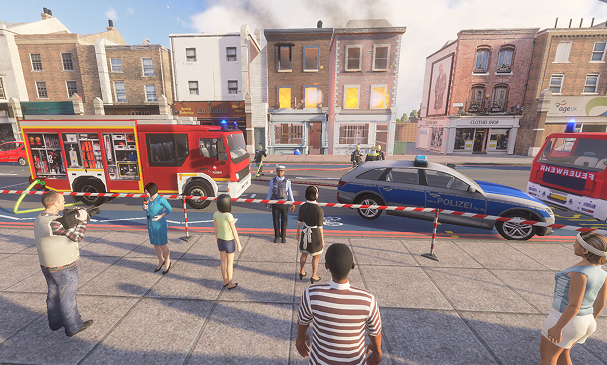
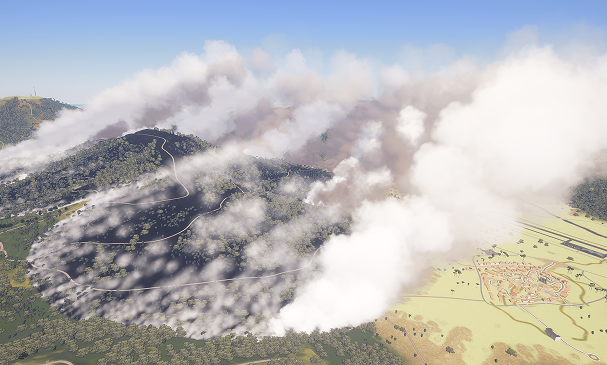
Create realistic incident scenes using detailed 3D environments that support immersion and help participants form a clear mental picture of the situation they are managing.
Scalable complexity and flexible command levels
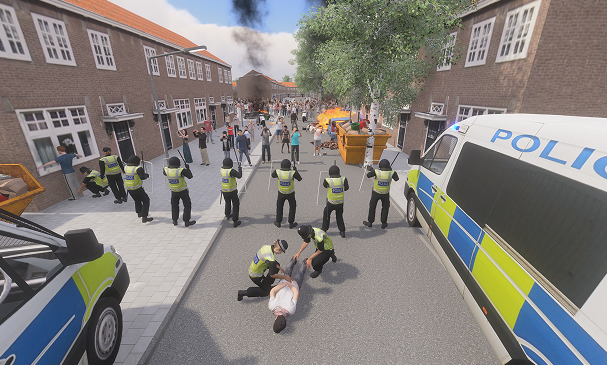
XVR On Scene allows instructors to run anything from straightforward incidents to large‑scale, evolving scenarios. Adapt complexity to match experience/command level, roles and responsibilities, and learning objectives.
Dynamic scenario progression
Scenarios evolve in response to participant actions and decisions, allowing instructors to escalate, de-escalate, or redirect events in real time to support learning goals.
Localisation and customisation
Instructors can build scenarios that reflect local conditions, procedures, and contexts, making training more recognisable, relevant, and effective for participants.
Support for assessment and evaluation
Repeatable scenarios and consistent starting conditions make XVR On Scene suitable for structured assessment, feedback, and capability development over time.
Want to know how VR can transform your curriculum?
Leave your details and we’ll send you:
Participants manage an evolving virtual incident independently, allowing focused instructor-led training of decision-making, situational awareness, and command skills.
Multiple participants work together within the same scenario to practise communication, coordination, and shared understanding as an incident develops.
Different disciplines train together in a single virtual incident, supporting joint objectives such as inter-agency communication, role clarity, and coordinated response.
Instructors use virtual scenarios to illustrate incidents, procedures, and decisions to a group, creating a shared visual reference for discussion and learning.
Participants and instructors can train together on a secure network from different locations, enabling flexible delivery while maintaining instructor control and interaction.
Participants play through an on-rails scenario by themselves, allowing them to familiarise themselves with incident types, procedures, or environments ahead of instructor-led training.
Get a clear snapshot of what XVR On Scene can deliver – download the full product overview here.