

We are excited to announce the release of the latest update of our VR training software, XVR On Scene 10.2! Read on for a highlight of some of the notable improvements, or read the previous release announcements of XVR On Scene 10 here.
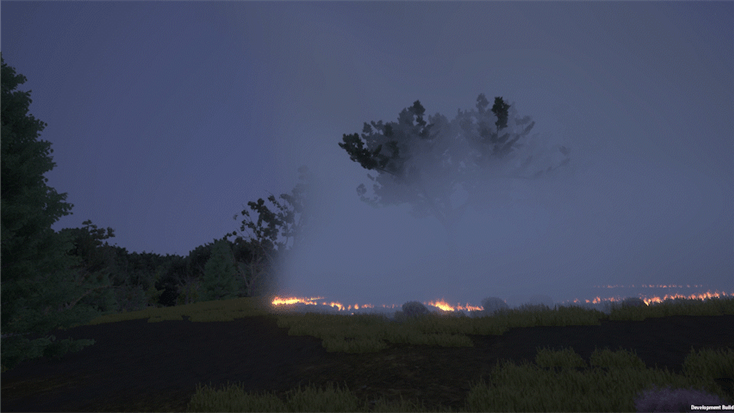
New features in wildfire simulation with Fire Front
The new wildfire simulator tool, Fire Front, was released in the Core version of XVR OS10 with support for fire ranks 3 and 4, which are both fairly vigorous surface fires. In this update, fire ranks 1 and 2 have been added, as well as more refined options to visualise burn damage to the environment. This allows users even more flexibility when designing wildfire scenarios – from depicting yesterday’s fire to simulating the evolution of a wildfire, from smouldering to blazing.
Developments of Fire Front will continue in future releases to allow even more immersive, flexible and realistic wildfire simulations.
Improvements to the Tools & Inventory functionality
The Tools & Inventory functionality for VR HMD was introduced in XVR On Scene 23. Since then, valuable user feedback has been gathered and assessed, and the functionality has now found a good balance between new and earlier features in a way that moves developments forward while still maintaining usability and user-friendliness.
The Quick Item menu has been streamlined, making it much simpler for participants to use, and allowing for an experience that feels more recognisable to those familiar with the tool system as it was before OS10.
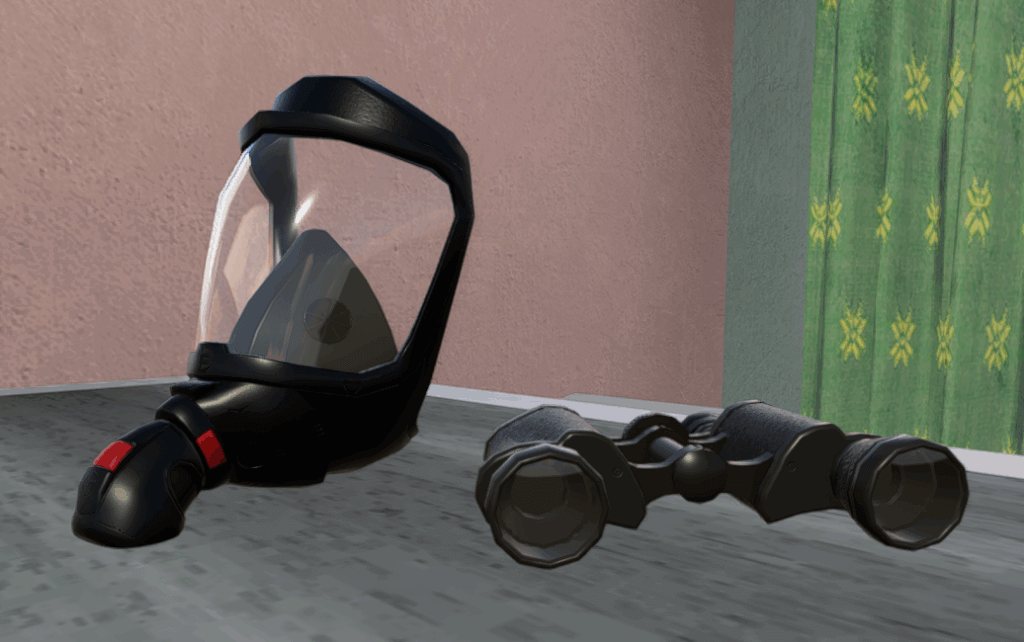
Finally, this version introduces VR HMD support for more tools – the breathing apparatus and binoculars. This marks a milestone for XVR OS, as all available participant tools are now functional in both VR and on traditional screens.
Other notable improvements
This version sees the development a new “marker” feature. This is an easy way to signpost something – an event, a location, an object – to grab the participant’s attention, or to indicate a meeting point when doing a training with multiple participants.
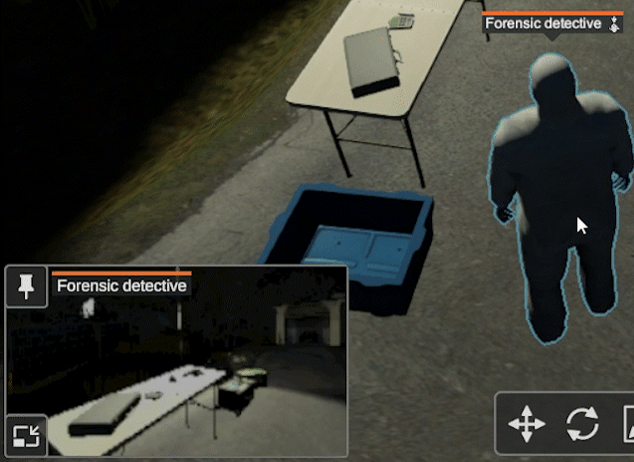
XVR On Scene 10.2 also introduces a new “picture-in-picture” feature, which should improve the ‘quality of life’ for XVR operators. Rather than switching between views, operators will be able to see exactly what the participant is seeing, while still efficiently deploying and anticipating future narrative events.
Finally, graphics performance has been improved through AI-based image upscaling with NVIDIA, which should give users better performance for the same image on the same hardware.
To learn more about XVR and how VR training is used by first responders worldwide, visit www.xvrsim.com.